THE GREAT DISPLACEMENT

How COVID-19 Rewrote the Contract Between Employers and Employees

By Farhan Tariq | CTO, Co-Founder, Cloud & Engineering Executive

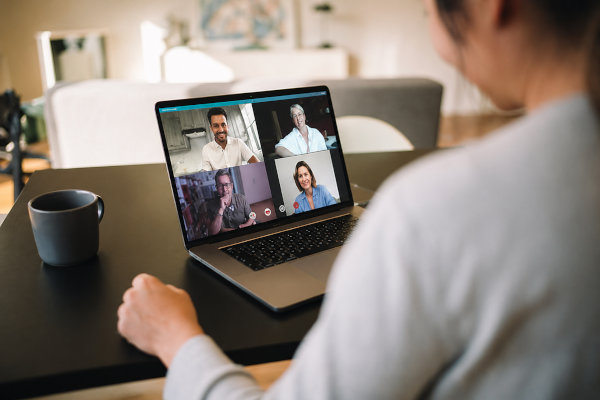
Professional working from home on a laptop during a remote team video meeting in a modern home office

A Leadership Perspective on Productivity, Loyalty, and the Future of Work

In March 2020, the world did not choose remote work. It was imposed. Overnight, billions of professionals converted dining rooms into offices, kitchen tables into boardrooms, and video calls into the new handshake. What began as a public health necessity soon revealed itself to be something far more consequential: a permanent restructuring of the relationship between work, place, loyalty, and leadership.

Six years on, the dust has not fully settled. What COVID-19 accelerated was not simply a technological shift, but a philosophical one. Workers discovered autonomy. Leaders discovered vulnerability. And organizations discovered that culture, once assumed to be something that lived in hallways and conference rooms, is far more fragile than anyone imagined.

This article examines the full arc of that transformation: the undeniable benefits, the systemic abuses that followed, the crisis of loyalty and commitment that now defines the workforce, and what forward-thinking leadership must do to rebuild trust in a hybrid world.

PART I: THE OVERNIGHT EXPERIMENT

The Scale of the Shift

The numbers are staggering. Before the pandemic, only 6.5% of workers in the U.S. private sector worked primarily from home. By May 2020, that figure had climbed to 61% a tenfold expansion compressed into eight weeks. No workplace transformation in recorded history has moved this fast across this many industries simultaneously.

The world adapted. Zoom grew from 10 million daily meeting participants to over 300 million. Slack, Microsoft Teams, and a generation of collaboration tools were thrust from niche usage into mission-critical infrastructure. Remote workplace services a $20.1 billion market in 2022 are projected to reach $58.5 billion by 2027.

According to the U.S. Bureau of Labor Statistics, remote work increased dramatically across all major industries between 2019 and 2021. Even as social distancing restrictions eased in 2022, remote work settled at approximately five times its pre-pandemic level a permanent baseline shift, not a temporary exception.

PART II: THE UNDENIABLE BENEFITS

Freedom, Time, and the Value of the Commute

The most immediate and universally celebrated benefit of remote work was the elimination of the daily commute. Stanford economist Nicholas Bloom, who had studied remote work long before it became mainstream, found that hybrid workers save approximately five hours per week in commute time alone. Employees valued that time savings at roughly 8% of their salary the equivalent of a meaningful raise, at zero additional cost to the employer.

Beyond the commute, remote workers reported sweeping quality-of-life improvements. Independent surveys found that 93% of remote professionals agreed that working from home had a positive impact on their mental health, and 90% reported improvements to their physical health. The elimination of rigid schedules, the ability to manage personal responsibilities without conflict, and reduced workplace stress all contributed to what researchers described as a genuine increase in employee wellbeing.

Remote workers demonstrated the lowest stress levels compared to both hybrid and in-office peers: only 36% of remote workers reported increased stress levels in a given year, versus 55% of hybrid workers and 59% of in-office employees. Remote employees are also 24% more satisfied with their roles than their on-site counterparts, and organizations offering remote work see up to 25% lower turnover.

Productivity: A Complicated Picture

The productivity question has no clean answer and that is itself a critical insight for leaders. Stanford research found remote workers 13% more productive than their office counterparts. Gallup’s State of the Global Workplace report found that fully remote workers report the highest engagement rates at 31%, compared to 23% for hybrid workers and 19% for on-site employees. Separately, 79% of managers surveyed felt their teams were more productive when working remotely.

However, a rigorous study of over 10,000 skilled IT professionals at an Indian technology firm told a more sobering story: hours worked increased, yet measured output declined slightly, and overall productivity fell 8 to 19%. The culprit was not laziness it was coordination overhead. Time spent in meetings increased. Uninterrupted focus time collapsed. Employees networked with fewer colleagues and had fewer one-on-one interactions with managers.

The paradox is real. Remote work can enhance individual output while degrading collaborative output. The ideal, most research now suggests, is the hybrid model: three to four days working off-site per week maximizes both individual productivity and organizational engagement.

"The longer remote work lasts, the more leaders realize that visibility is not the same as value, and presence is not the same as performance."

Financial and Organizational Benefits

The financial case for remote work is compelling from both sides of the employment relationship. Employees working remotely full-time save an estimated $12,000 per year in transportation, clothing, meals, and related costs. IBM reportedly saved $50 million in real estate costs by transitioning to remote work a single data point that illustrates the scale of operational savings available to organizations willing to rethink physical infrastructure.

For employers, companies save an average of $11,315 per year for each employee working remotely part-time, and research by Global Workplace Analytics suggests that companies lose approximately $600 billion annually to workplace distractions a cost that distributed work meaningfully reduces.

PART III: THE DARK SIDE OF LIBERTY

When Autonomy Became License: The Rise of Overemployment

The same flexibility that liberated millions of professionals from soul-crushing commutes also created conditions that a subset of the workforce exploited in ways employers never anticipated. As remote work removed physical oversight, a hidden behavior began to spread: overemployment the practice of secretly holding multiple full-time jobs simultaneously without disclosing this to any employer.

What began as isolated anecdotes became a documented phenomenon. A Reddit community dedicated to overemployment attracted hundreds of thousands of members. A single software engineer discovered to be simultaneously employed at multiple Silicon Valley startups triggered industry-wide audits. Fortune magazine documented overemployed remote workers earning more than $725,000 per year while managing up to five concurrent full-time roles all within a standard 40-hour week.

The legal and ethical framework around this behavior is stark. As employment law firm Ogletree Deakins noted, while some employers permit outside employment, those policies are designed for work performed at separate times not for simultaneous employment. When an employee holds two full-time roles concurrently, neither employer receives full-time dedication. Both are effectively subsidizing the other. Both are exposed to potential confidentiality breaches, whether intentional or accidental.

The Consulting Sector and the Double-Billing Problem

Overemployment took a distinct form within the consulting and IT staffing industries. As demand for technical talent exploded during the pandemic and companies competed aggressively for skilled professionals, a parallel market emerged: consultants engaged by staffing firms and consulting companies were being simultaneously placed on multiple client projects often billing full-time rates to each.

This is not merely an ethical issue. It is a structural one. A consultant engaged at 100% to two separate clients is, by definition, delivering less than 100% to either. Deliverables are delayed. Attention is divided. The client organization, which has structured its project timelines and resource plans around that consultant’s assumed availability, absorbs the consequences without ever knowing the underlying cause.

For organizations in technology consulting, managed services, and professional services, this dynamic represented a significant governance failure one that was enabled by the opacity that remote work created and the urgency that pandemic-era hiring timelines demanded.

The Erosion of Loyalty and Commitment

Beyond the dramatic cases of overemployment lies a more subtle and perhaps more corrosive trend: the broad erosion of organizational loyalty, commitment, and mission alignment that followed the shift to remote work. The data here is deeply concerning for anyone responsible for building and leading organizations.

Gallup’s research reveals that trust in organizational leadership declined significantly since the onset of the pandemic. As of the most recent survey period, only 23% of U.S. employees strongly agreed that they trust the leadership of their organization. The number of employees who feel connected to their organization’s mission and purpose the factor most strongly correlated with discretionary effort and long-term retention has fallen sharply.

In 2023, managers themselves became the most disengaged cohort in many organizations. They were more likely than their direct reports to report burnout, dissatisfaction with employer care for their wellbeing, and active job searching. This matters disproportionately because Gallup’s research consistently shows that managers account for approximately 70% of the variance in team engagement. A disengaged management layer cascades into a disengaged workforce.

"Without the physical presence of colleagues, employees can drift off course and become disconnected from the company's mission silently and gradually, until the damage is already done."

PART IV: THE RETURN-TO-OFFICE COLLISION

The Pendulum Swings

By 2022 and 2023, many organizations that had embraced remote work during necessity began an assertive push to reverse course. Return-to-office mandates spread across Fortune 500 companies. Amazon’s Andy Jassy stated publicly that it was easier for employees to learn, practice, and strengthen culture when working together in the office most of the time. JPMorgan Chase, Goldman Sachs, Disney, and dozens of other major employers followed with policies requiring in-person presence for three to five days per week.

The data reflects this pressure: the number of workers required to be in the office regularly surged to 75% in late 2024, up from 63% in early 2023, according to Pew Research Center. A Cisco survey found that 72% of respondents’ organizations had implemented formal in-office mandates.

But the workforce pushed back harder than leadership expected. Nearly half of workers surveyed said they would seek new employment if their employer no longer allowed them to work from home. A survey of 700 business leaders in October 2024 found that 75% were facing active resistance from employees unwilling to comply with in-office mandates. The return-to-office movement, for all its executive conviction, ran directly into a workforce that had reorganized its life around flexibility.

The Talent Risk

Organizations pursuing aggressive return-to-office mandates face a talent paradox. The sectors where remote work is most entrenched technology, consulting, financial services, professional services are also the sectors where talent is most scarce and most mobile. A company that mandates full office return in an industry where competitors offer hybrid arrangements does not simply risk employee dissatisfaction; it risks losing its best performers to organizations that offer greater flexibility.

Research confirms the stakes. Employees who worked remotely before a return-to-office mandate had already restructured their lives often relocating to lower cost-of-living areas, adjusting family arrangements, or simply building routines incompatible with daily commutes. Forcing that reversal is not a neutral act. It is a renegotiation of an implicit contract, and many employees are declining to sign.

PART V: WHAT LEADERSHIP MUST NOW CONFRONT

The New Contract of Accountability

The leadership challenge of the post-pandemic era is not primarily technological. The tools exist. Collaboration platforms, productivity monitoring software, project tracking systems, and asynchronous communication frameworks are mature and widely available. The challenge is organizational and human: how to build cultures of accountability, trust, and genuine commitment in an environment where physical co-location can no longer be assumed.

Research from Great Place To Work’s 2024 analysis of 1.3 million employees reveals that the single factor most predictive of exceptional productivity is cooperation the belief that colleagues can be counted on. Employees who feel that teams cooperate are 8.2 times more likely to give discretionary effort. Critically, co-location is not required for cooperation. Of the 2025 Fortune 100 Best Companies to Work For, 97 support remote or hybrid work. Productivity at those companies is nearly 42% higher than typical U.S. workplaces. The variable is not where people work it is how leadership builds the conditions for cooperation.

Confronting the Overemployment Problem

Leaders in technology, consulting, and professional services must directly address overemployment as an organizational risk, not merely a moral failing. This means establishing clear contractual language around exclusivity and conflict of interest, implementing regular deliverable reviews that go beyond status updates to assess actual output quality, and conducting reference checks that include questions about current employment status and availability.

More fundamentally, it means building performance management frameworks that measure outcomes rather than presence. The irony of overemployment is that it thrives in exactly the environments where leaders failed to establish clear expectations: organizations that confused activity with output, hours logged with value delivered, and availability on messaging platforms with genuine engagement. Leaders who build rigorous outcome-based accountability frameworks create an environment where overemployment becomes nearly impossible to sustain because results, not hours, are what matter.

Rebuilding Loyalty in a Disloyal Era

The erosion of employee loyalty is not simply the result of remote work. It is the result of a compounding series of trust failures: companies that promised flexibility and then reversed it, leaders who communicated inconsistently during successive waves of organizational change, and managers who were themselves squeezed to the point of disengagement. Loyalty is a two-way contract, and for many employees, they perceived that their organizations had not honored their side of that contract.

Gallup’s research offers a precise and important finding: when leaders communicate clearly, lead and support change, and inspire genuine confidence in the future, 95% of employees report fully trusting their leaders. The gap between 23% and 95% is not a gap in technology or workplace policy. It is a gap in leadership behavior.

The most forward-thinking leaders are investing in what researchers call psychological safety: the organizational condition in which employees feel secure enough to speak candidly, raise concerns, admit errors, and ask for support without fear of professional consequence. At companies ranked among the best workplaces in 2025, 81% of employees described their work environment as psychologically and emotionally healthy. In typical U.S. workplaces, that figure is 45%. That 36-point gap is not a policy gap. It is a leadership gap.

The Hybrid Model as Strategic Imperative

The weight of evidence converges on a clear conclusion: neither fully remote nor fully in-office represents the optimal model for most organizations. The hybrid approach structured, deliberate, and consistently applied delivers the best combination of individual productivity, team engagement, and organizational cohesion.

Stanford’s Nicholas Bloom argues persuasively that the pandemic-driven shift to hybrid work is not a temporary accommodation but a permanent productivity gain one that, combined with accelerating investments in collaboration technology, positions hybrid-first organizations for sustained competitive advantage. The companies that will lead the next decade are not those that force their workforce back to the pre-2020 status quo, nor those that abandon all physical infrastructure entirely. They are those that architect a hybrid model with the same discipline they would bring to any critical organizational system.

That means specifying which days teams meet in person and enforcing it consistently. It means investing in managers as the connective tissue of distributed teams. It means measuring outcomes with rigor and treating time-based surveillance as a symptom of leadership failure rather than a solution to it. And it means understanding that culture is not a building it is a set of shared behaviors, beliefs, and commitments that can be built in any environment, provided leadership is intentional enough to do the building.


CONCLUSION: THE CONTRACT THAT MUST BE REWRITTEN

COVID-19 did not simply change where people work. It revealed the fragility of assumptions that leaders had never been forced to examine: that presence implies engagement, that visibility implies productivity, and that loyalty is something employees owe rather than something organizations earn.

The best organizations emerging from this era understand that the new contract of work is one of mutual accountability. Employers offer genuine flexibility, clear purpose, psychological safety, and consistent leadership. Employees offer full commitment, transparent availability, and outcomes that justify the trust placed in them. That contract cannot be enforced through surveillance software, return-to-office mandates, or punitive policy. It must be built relationship by relationship, manager by manager, team by team.

The pandemic gave the world an unplanned experiment in how work really functions. The results are in: people can work effectively from anywhere, provided they are led effectively by someone. The crisis of the remote work era is not a crisis of location. It is a crisis of leadership. And that, unlike a commute, is a problem that every organization can choose to solve.

Guest blog post by Farhan Tariq

CTO, Co-Founder, Cloud & Engineering Executive

Farhan Tariq is Director of Software Development and IT Operations at ZPro Solutions and Co-Founder of Y Axis Solutions, with over two decades of experience in enterprise cloud architecture, engineering leadership, and managed services.

Sources: U.S. Bureau of Labor Statistics | Gallup State of the Global Workplace | Stanford University (Nicholas Bloom) | Great Place To Work | Journal of Political Economy Microeconomics | Ogletree Deakins | Fortune | Pew Research Center | Global Workplace Analytics | Owl Labs